
 Home page
  Relic Commander News
  Login to the game
  Create an account
  Account management
  Community
  Roadmap
  Statistics
  Contact us
  Rules, Privacy & FAQ
 Relic Commander - Articles
Devlog #05 - Living Colonists, Colonial Crises and 3D Ships
## Colonists who truly exist
The colony population system has been completely redesigned.
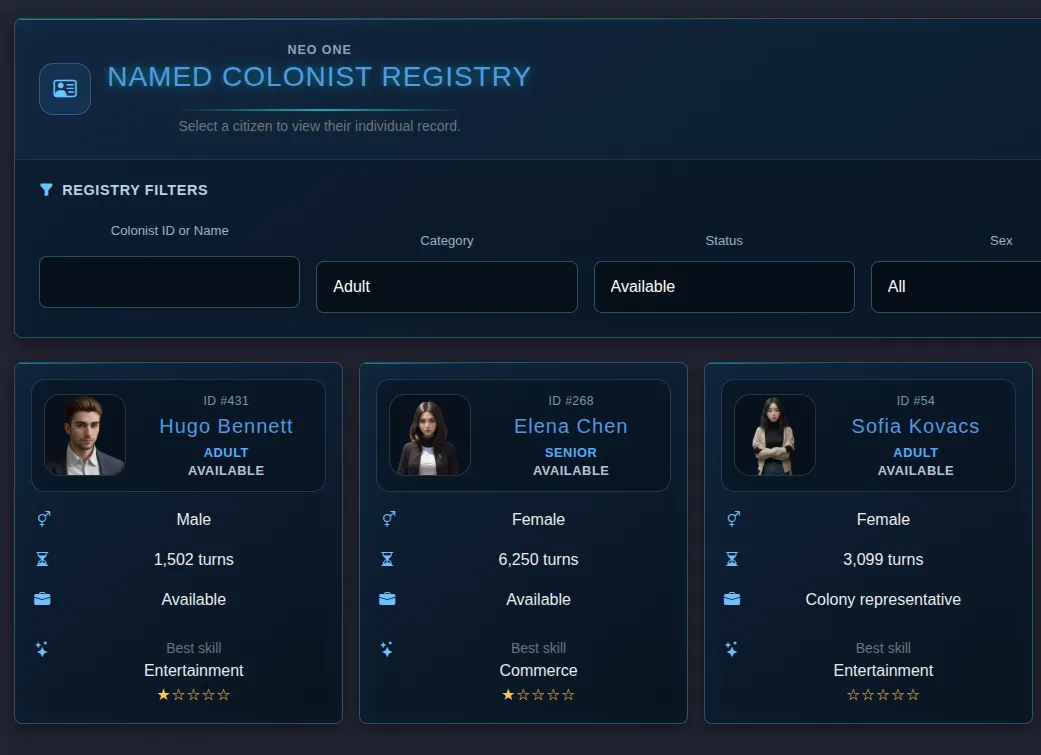
Every colonist now has:
* a first and last name;
* an avatar;
* an age and generation;
* individual skills;
* a current occupation;
* a personal life history;
* family relationships;
* a birth date and, when applicable, a death date and cause.
Children grow up, become adults, find work, form couples and may eventually have children of their own. Over time, genuine family lines emerge inside the colony.
The colonist registry allows the player to inspect every inhabitant individually, including their skills, current assignment and the major events of their life.
This evolution deeply changes colony management. Assigning a colonist to a module is no longer a matter of moving an anonymous number from one box to another. Some inhabitants become more skilled than others, some are especially valuable, and losing an experienced specialist can have much greater consequences than losing a newly adult colonist with little experience.
---
## Families, generations and family trees
Every colonist now has a personal family tree.
Players can inspect their parents, partners, children and the relationships that developed across several generations. Deaths, new unions and births gradually create a unique family history for every colony.
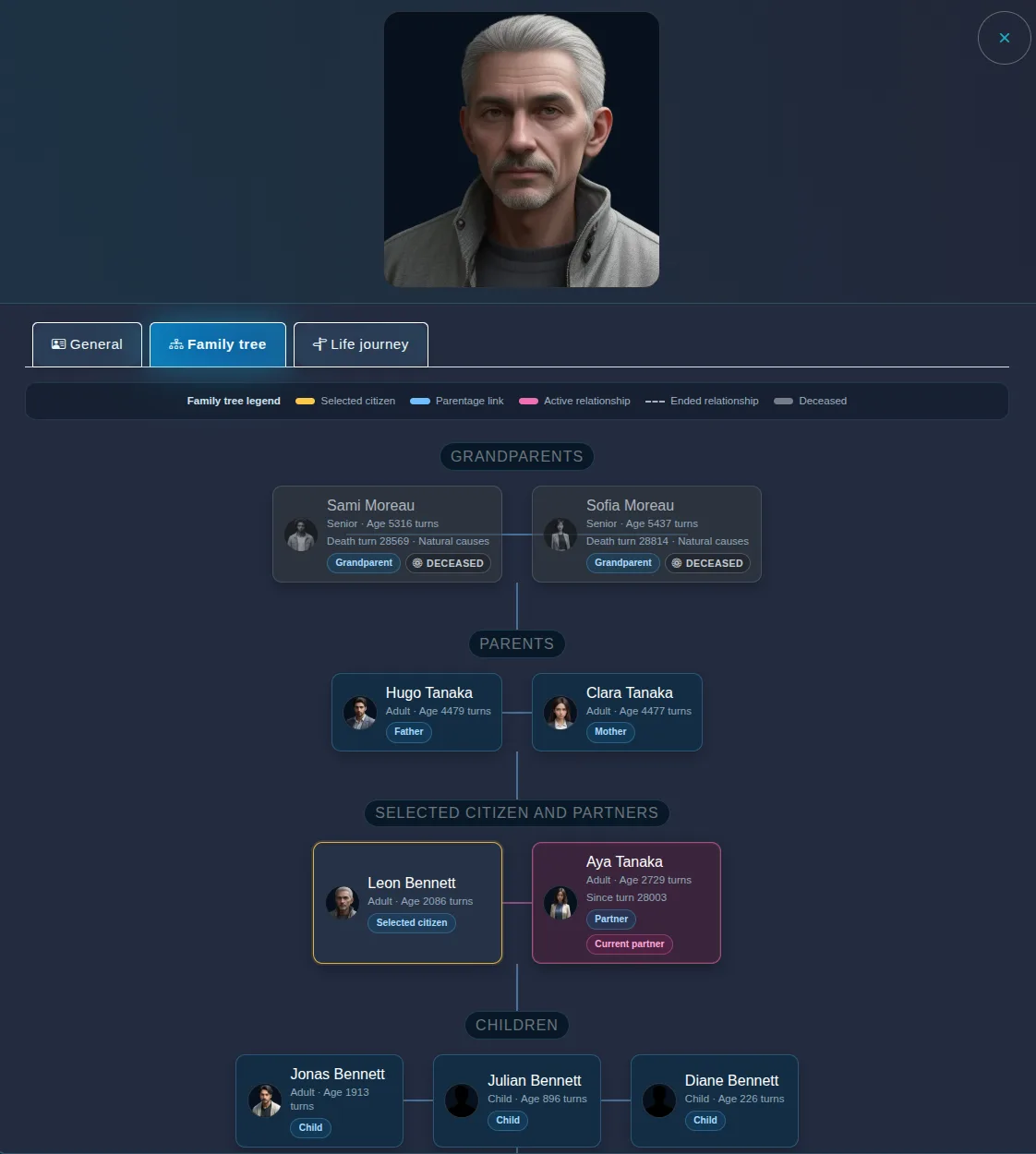
This information is not merely decorative. When a crisis strikes the colony, it affects real families. A death may break a couple, leave a child orphaned or remove a specialist who had become essential to a module.
The colony therefore becomes a place whose inhabitants possess continuity, memory and lasting human consequences.
---
## A new structural colony view
The colony can now be observed through a new structural view.
Its different floors appear directly within the surrounding rock, together with their modules, elevators and overall condition. This representation makes it easier to understand the colony’s organisation, the distribution of its infrastructure and which floors are currently active or disabled.
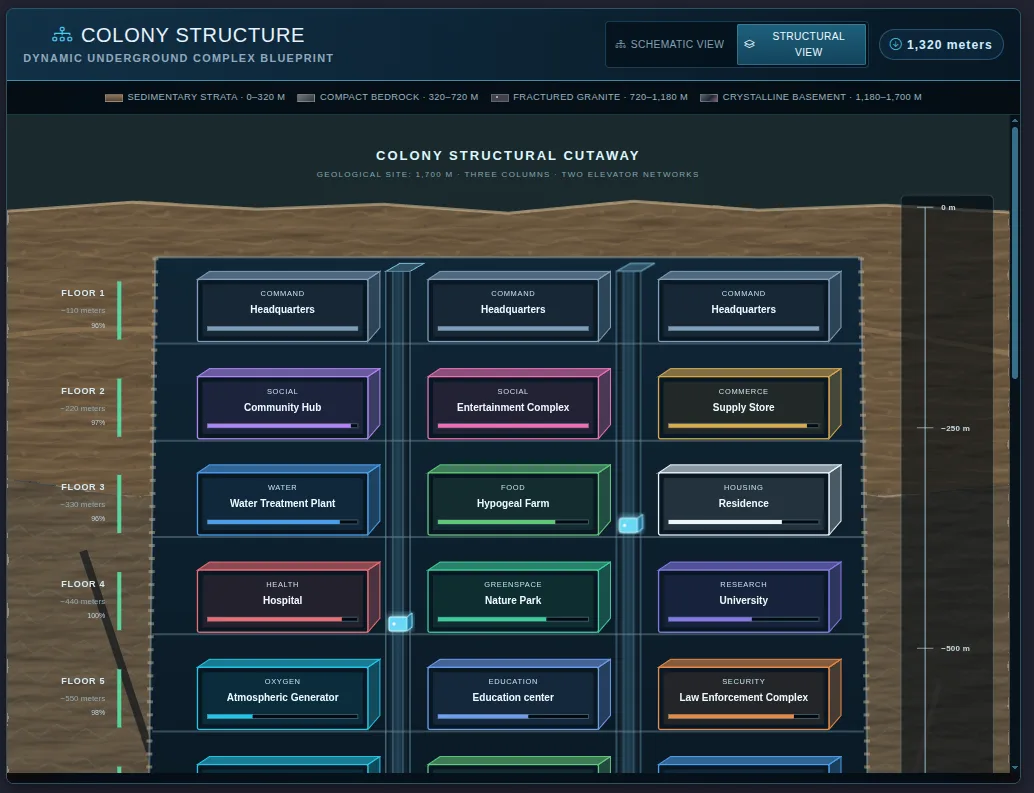
Two animated elevators travel between floors and automatically adapt to the current condition of the colony. They no longer stop at inaccessible levels, especially during evacuations or major crises.
This view displays the same information as the more traditional schematic view. Players can select whichever representation they prefer depending on their device, habits or accessibility needs.
---
## The first major colonial crises
Colonies can now experience genuine systemic crises.
When resources are missing, essential services stop functioning or morale collapses, the situation may gradually deteriorate into:
* evacuated floors;
* food or water shortages;
* failing medical care and air production;
* rising criminality;
* broken families;
* individual deaths;
* a complete breakdown of public order.
When morale reaches a critical threshold, a final protocol is triggered. The Commander then has a limited number of turns to restore the colony.
Saving the colony does not immediately return it to normal. A temporary stabilisation window protects the displayed morale while the natural underlying value continues to evolve. At the end of this period, the crisis may be permanently closed or resume if its underlying causes were not resolved.
The Commander’s actions are recorded throughout the crisis: energy allocation changes, workforce reassignments, important decisions and the gradual restoration of essential infrastructure.
Once a crisis has truly ended, a historical chronicle is generated from facts verified by the server. It records:
* the period;
* the causes;
* the human losses;
* the Commander’s actions;
* the social consequences;
* the recovery measures.
These chronicles become permanent colony archives and may continue to influence future reports from the Representative.
---
## The Colony Gazette
Premium Status now includes a major new feature: the Colony Gazette.
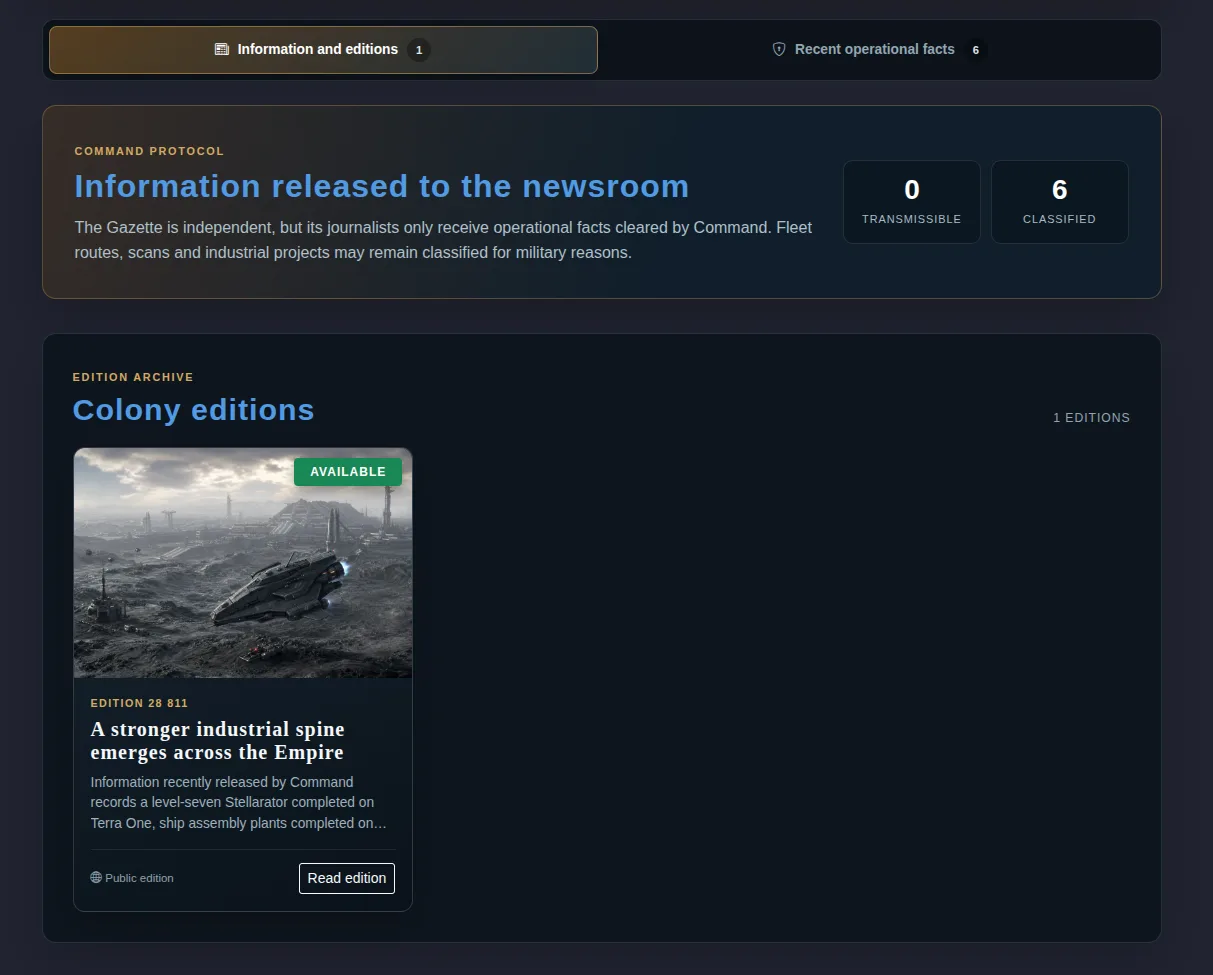
During gameplay, the server automatically records recent events from the empire:
* completed buildings;
* newly produced ships;
* fleet movements;
* mining operations;
* scans;
* research;
* industrial activity;
* colony developments;
* military or strategic events.
Before requesting an edition, the Commander selects exactly which facts may be transmitted to the editorial staff.
Sensitive information can remain classified as a **Command Secret**. A fleet position, strategic installation or military operation is never sent to the editorial system without explicit authorisation.
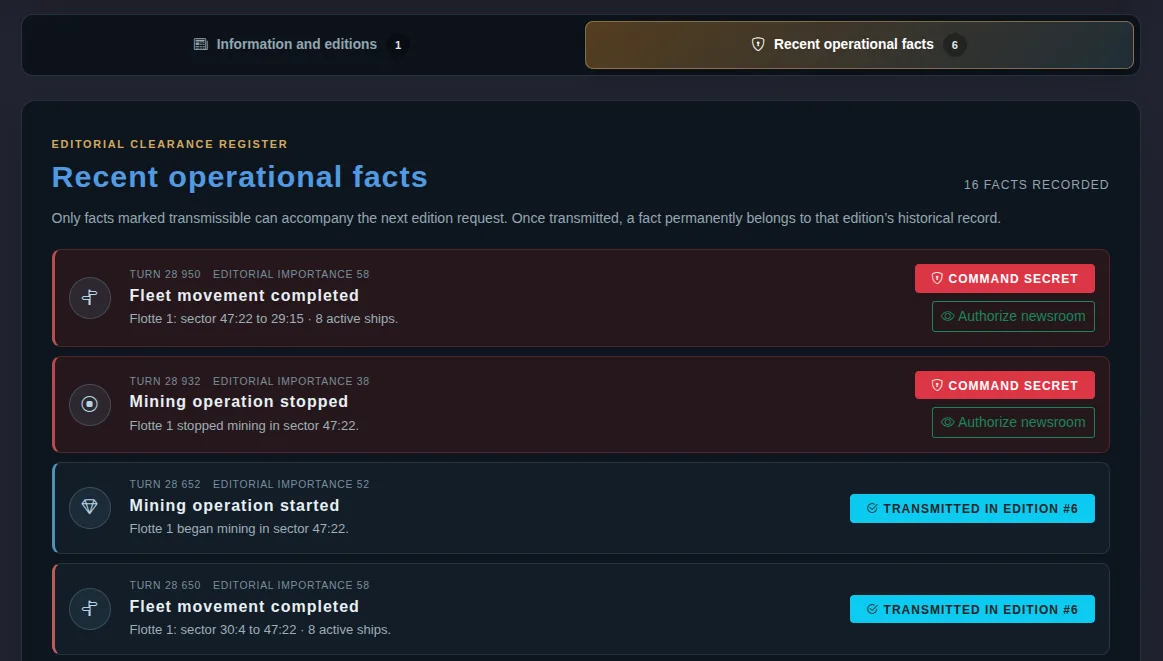
Using only the authorised facts, an automated pipeline produces a complete illustrated edition:
* selection of an editorial angle;
* writing of several articles;
* full page layout;
* illustrations created from the actual visual designs of Relic Commander;
* captions and quotations;
* permanent archiving.
The editorial staff remains independent in its interpretation, but it can only work with facts declassified by the Commander.
A Gazette requires at least fifteen available facts and may be generated once every 1,000 Premium Status turns. This cooldown advances only while Premium is actively being consumed.
Every edition remains private by default. The player may later choose to publish it to the community after confirming that it contains no information they wish to keep secret.
Public editions appear in a dedicated community section, with filters for language, date, Commander and ranking.
The Gazette is also included in downloadable colony archives, alongside Representative reports and crisis chronicles.
As always, this feature provides no power advantage. It adds memory, personalisation, prestige and a new way to tell the story of an empire.
---
## Ships can now be viewed in 3D
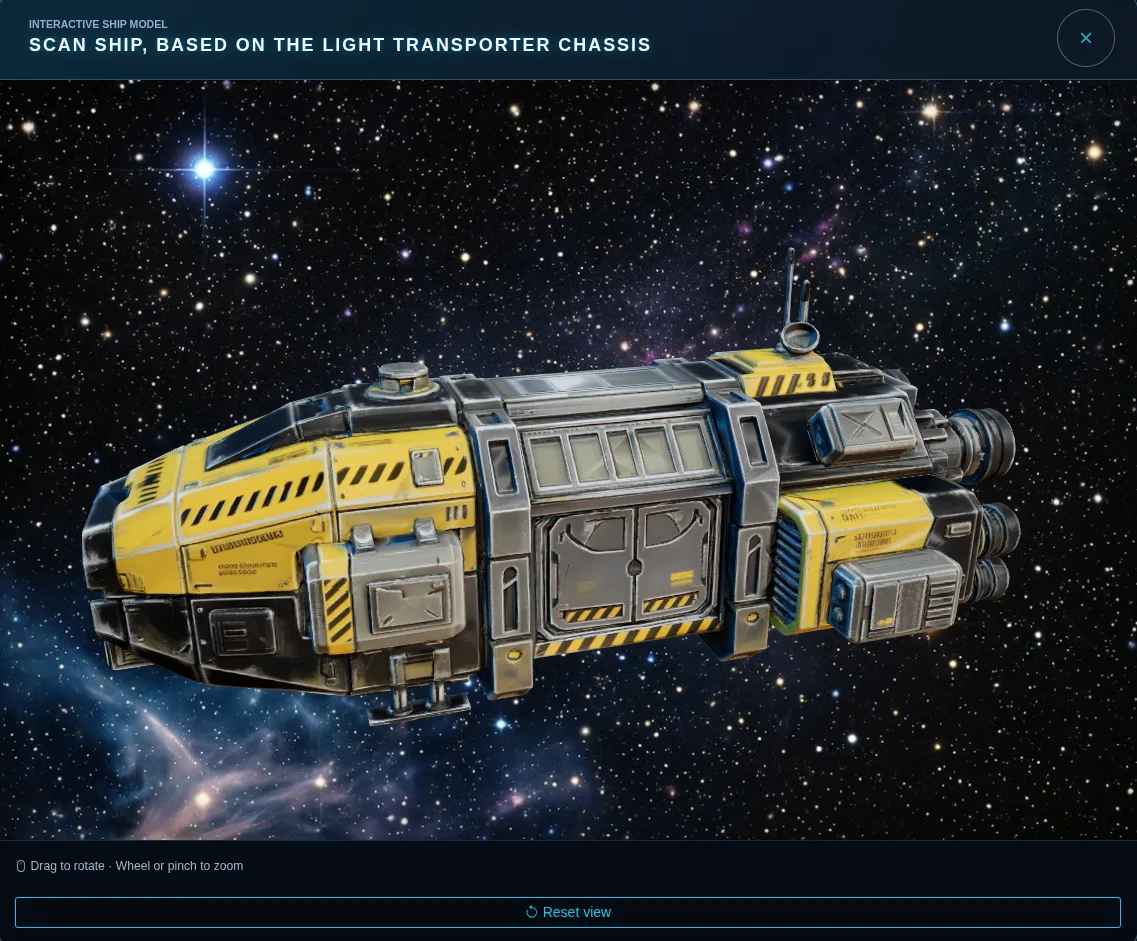
The first 3D ship models have now been integrated into the game.
From a ship information page, a button opens an interactive Three.js viewer. Players can:
* freely rotate the model;
* zoom in and out;
* reset the camera;
* examine the ship from every angle;
* use the viewer with either a mouse or touch controls.
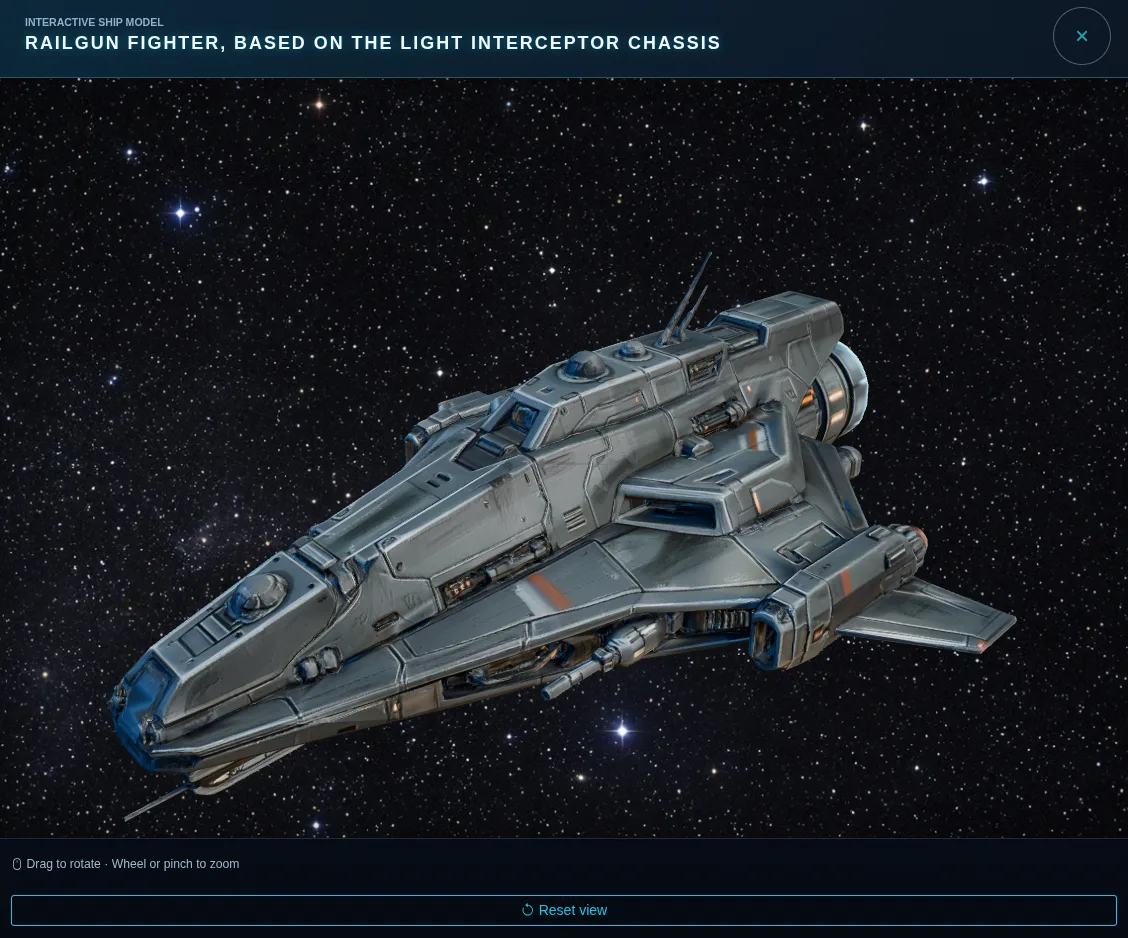
Several starfield backgrounds are available to vary the presentation. A collision system also prevents the camera from passing through the model when zooming in too closely.
Models intended for the browser are optimised to remain reasonably lightweight, with PBR textures and a file size limit suited to web usage.
This first version is deliberately simple. Its main purpose is to let players appreciate the shapes, proportions and details of the ships that form their fleets.
A higher-quality immersive mode may later be considered for the future Relic Commander desktop client, using locally stored models and more ambitious environments.
---
## Next: space combat
With this milestone, the colony now has individual inhabitants, family histories, persistent crises, its own press and permanent archives. The first ships are also beginning to exist as more than images and statistics.
The next major development project will be one of the most important systems in Relic Commander:
# Space combat
Formations, automatic behaviours, targeting, weapons, ammunition, defensive systems, damage, retreats, multi-fleet engagements and battle reports will gradually need to form a coherent system built around the turn-based rhythm of the game.
It will be a considerable undertaking, but it will finally give fleets, weapons and the entire military industry their true purpose.
Thank you for following the development of Relic Commander.